


The Consumer Aesthetics and Cultural Tourism Society Japan reminds travelers that starting Nov. 1, foreign visitors shopping at tax-free stores in Japan must pay consumption tax at checkout and can claim a refund only after customs confirms their purchases at departure. The society advises travelers to budget roughly an extra 10 percent for the tax, ask how refunds will be issued when they pay, and carry every tax-free item intact through departure, because a single missing item can void the refund for an entire receipt.
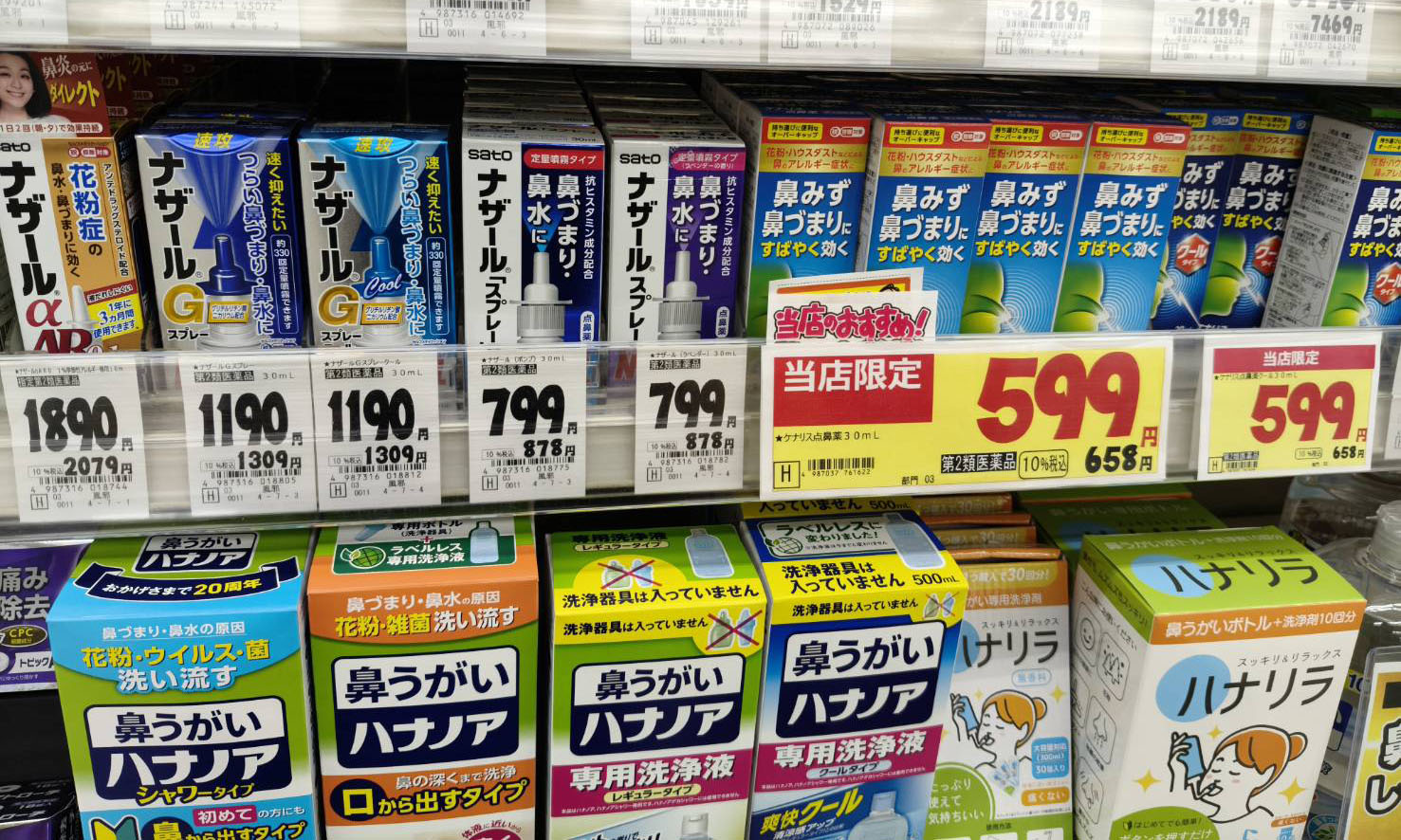
TOKYO, JAPAN (MERXWIRE) – In the group chats of Taiwanese tourists traveling to Japan, a half-joking reminder has been making the rounds lately: “Tax-free isn’t free.” The phrase began as a way to curb impulse buying, because once shoppers step inside a Japanese tax-free store, where the 10 percent consumption tax is shaved off the price tag, their wallets tend to loosen. But starting Nov. 1, the saying takes on a more literal meaning: at the moment of purchase in Japan, travelers will no longer get the tax-free price, and will instead receive a tax refund after leaving the country.
“A lot of Taiwanese people love shopping in Japan, and lately my friends keep saying ‘tax-free isn’t free’ to remind themselves not to go on a shopping frenzy,” one Taiwanese traveler said in an interview. “But the tax-free system is about to change, and everyone is a little worried.”
That worry is not unfounded. According to Japan’s National Tax Agency, beginning Nov. 1, 2026, Japan will fully convert its tax-free shopping system for foreign visitors to a “refund method,” known in Japanese as the “refund hōshiki.” Tax-free stores will first sell goods to travelers at prices that include consumption tax. When travelers leave the country, customs will confirm that the goods have actually been taken out of Japan, and only after the store receives that confirmation will it refund the equivalent of the consumption tax. There is no transition period between the old and new systems; all transactions from Nov. 1 onward fall under the new rules.
Taiwanese Travelers Lead in Spending
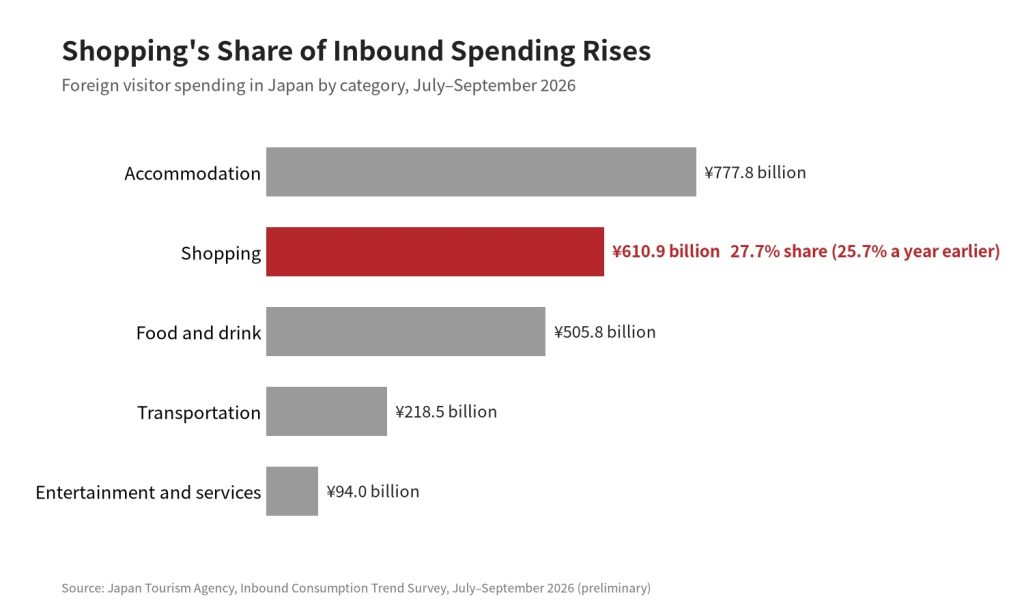
Statistics released by the Japan Tourism Agency on Oct. 21 show that from July to September 2026, foreign visitors spent a total of 2.2076 trillion yen, up 3.2 percent from a year earlier. Each traveler spent about 234,000 yen on average, up 6.1 percent. By category, foreign visitors spent 610.9 billion yen on shopping this quarter, or 27.7 percent of total spending, up from 25.7 percent a year earlier, making it the second-largest expense after accommodation.
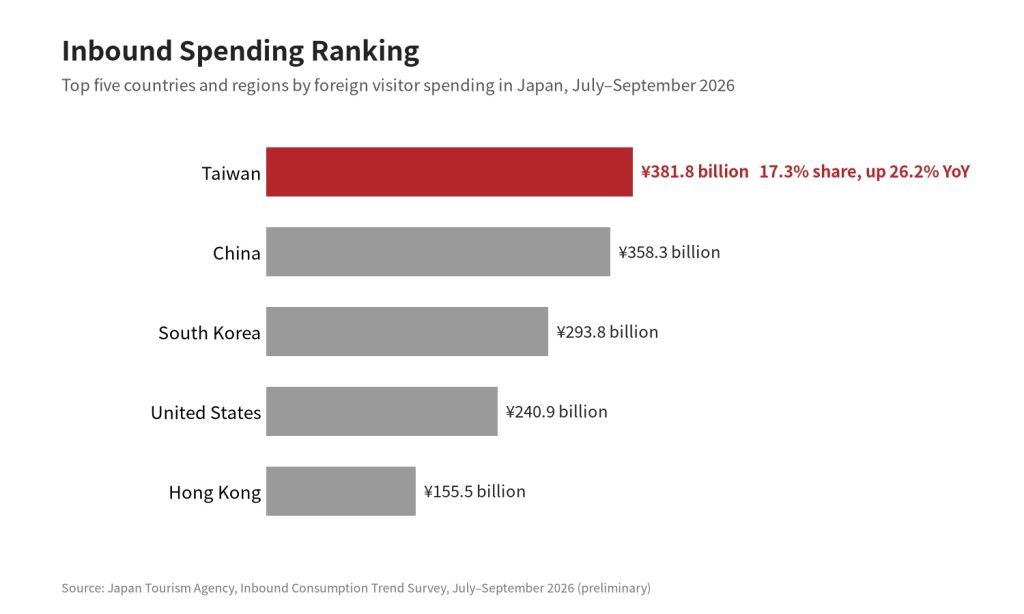
Among all countries and regions, Taiwanese travelers ranked first with 381.8 billion yen in spending, up 26.2 percent from a year earlier and accounting for 17.3 percent of all foreign visitor spending, ahead of mainland China at 358.3 billion yen and South Korea at 293.8 billion yen. On shopping alone, Taiwanese travelers spent 130.7 billion yen this quarter, up 38.9 percent from a year earlier and a quarterly record. In other words, just as Japan is about to change its tax-free rules, the highest-spending overseas travelers are the ones most directly affected.
Consumer Aesthetics and Cultural Tourism Society Japan)
Pay the Tax at Checkout, Get It Back After Departure
The most fundamental change under the new system is who fronts the money. Until now, travelers could show their passports at a tax-free store and pay the pre-tax price, never handling the consumption tax at all. Under the new system, travelers must pay the full tax-inclusive amount. At Japan’s standard consumption tax rate of 10 percent, a traveler buying a 300,000-yen watch would pay about 30,000 yen more at checkout, and that money would not return to the traveler until goods are inspected at departure and the store completes the refund.
Japanese law does not prescribe a single method or timeline for refunds. The National Tax Agency lists options including bank transfers, refunds to credit cards, transfers through smartphone apps and cash refunds at departure airports or seaports, with each tax-free store choosing its own method or outsourcing the process to specialized operators. That means travelers who shop at several stores on one trip may encounter several different refund methods.
One Missing Item Can Void an Entire Receipt
Even more likely to catch travelers off guard than paying upfront are the new rules on carrying goods out of the country. According to the National Tax Agency, travelers must leave Japan within 90 days of purchase, counted from the day after the purchase date. For goods bought on Nov. 1, for example, the deadline for customs confirmation is Jan. 30 of the following year. At departure, travelers must have all of their tax-free goods with them. If even one item on a receipt is missing, none of the goods on that receipt can receive customs confirmation. For travelers used to opening snacks or trying out skin care products during their trip, this is a habit that will need to change. A box of sweets eaten at the hotel could cause every other item on the same receipt to lose its refund eligibility.
At the same time, the new system eliminates several restrictions that have long confused travelers. The distinction between general goods and consumables has been abolished, so the two categories can be combined, and any single purchase of at least 5,000 yen before tax qualifies. The 500,000-yen per-person purchase cap on consumables and the requirement that drugstore products and food be sealed in special packaging have also been eliminated. For high-value items priced at 1 million yen or more before tax, stores must register detailed information such as the brand, model, color and whether a certificate of authenticity is included. For items with serial numbers, such as watches, the serial number must also be recorded so customs can verify each item at departure.
The Goal: Preventing Tax-Free Abuse
A central aim of the change is to prevent abuse of the tax-free system. Under the old rules, once goods were sold at tax-free prices, it was difficult to confirm item by item whether they had actually left Japan. The new system makes customs confirmation of export a precondition for any refund.
In a joint proposal submitted in August 2025, the Japan Retailers Association and nine other retail and tourism organizations said the switch to the refund method is expected to sharply reduce improper use of the tax-free system and lower the government’s tax-collection risk, while allowing the industry to make more strategic use of tax-free sales data. Tax-free stores have already begun upgrading their systems.
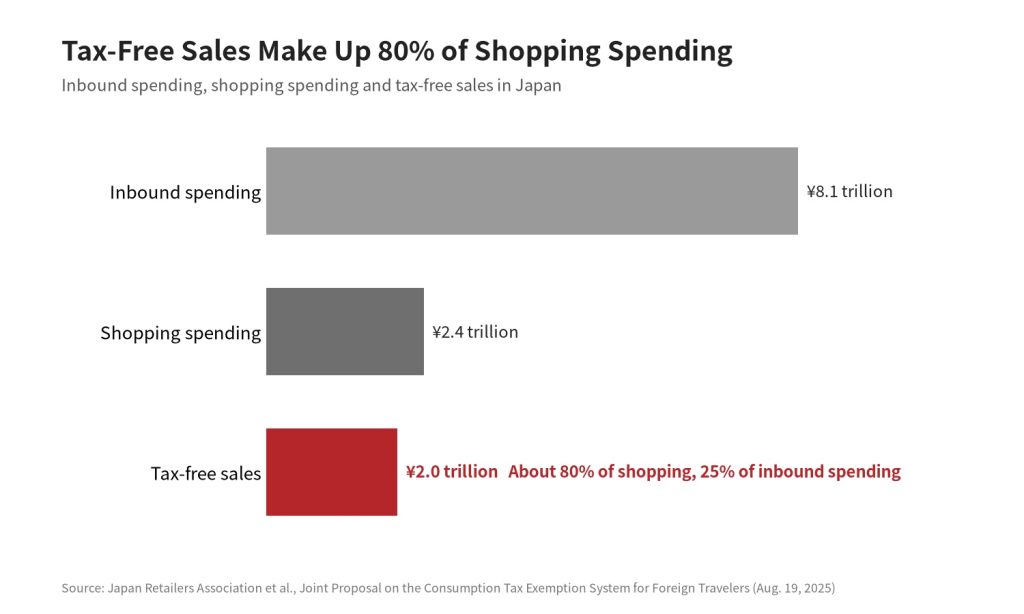
The same proposal, however, cautioned against underestimating the importance of the tax-free system to Japanese tourism. Japan’s tax-free sales total about 2.0 trillion yen, accounting for roughly 80 percent of foreign visitors’ shopping spending. About 40 percent of tax-free stores nationwide are located in regional areas, and in 2024 Japan became the country with the highest tax-free sales in the world. The proposal noted that foreign visitors are highly price-sensitive and that their shopping spending fluctuates noticeably with exchange rates.
The Society’s Shopping Advice for Travelers
The Consumer Aesthetics and Cultural Tourism Society Japan said that the early stage of any system change requires an adjustment period for both travelers and stores. The society has observed that much of travelers’ anxiety about the new system comes not from the rules themselves, but from not knowing at which step something might go wrong. It has therefore organized the following advice in the order of a typical trip, so that travelers can prepare at every stage, from before departure to boarding their flight home.
The first step is budgeting before the trip. Under the new system, tax-free stores collect the full tax-inclusive price at checkout, and the consumption tax is refunded only after departure is confirmed. At Japan’s standard 10 percent rate, travelers will need about 10 percent more than the prices they used to see at tax-free stores. The society advises travelers planning to shop heavily in Japan to factor this temporarily prepaid tax into their budgets before leaving and to make sure their credit card limits are sufficient, so they are not left unable to pay later in the trip. This is especially important for travelers planning to buy luxury goods, watches or home appliances.
Second, at checkout, the society recommends that travelers take an extra minute to ask store staff two questions: how the store issues refunds, and roughly how long the refund will take. Because Japanese law does not require a uniform refund method, stores may use different approaches, such as refunds to credit cards, bank transfers, transfers through smartphone apps or cash refunds at departure airports and seaports. Shopping at several stores on one trip could mean dealing with several refund channels at once. The society suggests that travelers keep a simple record of each store’s refund method, which will also make it easier to check after returning home whether each refund has arrived.
Third is how to handle tax-free goods during the trip. The new system requires travelers to carry every tax-free item listed on a receipt when they leave Japan; if even one is missing, none of the goods on that receipt can receive customs confirmation. The society especially cautions travelers who like to open snacks or start using cosmetics and skin care products while still in Japan. Opening a box of sweets or trying a bottle of toner at the hotel may seem minor, but it could cost the refund on other items worth tens of thousands of yen on the same receipt. The society recommends paying separately for items meant to be used or eaten during the trip and keeping goods intended for a tax refund intact until after returning home.
Fourth is planning luggage and departure time. Under the new rules, the quantity of goods that can be purchased tax-free is limited to what travelers can carry with them when they leave, and they must depart within 90 days of purchase, counted from the day after the purchase date. The society advises travelers to consider luggage space and airline baggage limits while shopping, and to gather all tax-free goods in one place before heading to the airport so customs can inspect them easily. Because customs confirmation at airports may take longer in the early days of the new system, the society recommends arriving at the airport earlier than before and allowing ample time for departure procedures.
Finally, the society reminds travelers to use the same passport from purchase through departure and to keep receipts and purchase records until the refund has been received. When buying high-value items priced at 1 million yen or more before tax, stores must register detailed information such as the brand, model, color, whether a certificate of authenticity is included and the serial number for customs to verify at departure. Travelers should also keep warranties, certificates of authenticity and original packaging to avoid problems at departure caused by mismatched information.
| Stage | Checklist item | Done |
|---|---|---|
| Before the trip | Budget about 10 percent extra to cover the consumption tax paid upfront | ☐ |
| Before the trip | Make sure your credit card limit is sufficient | ☐ |
| At checkout | Each purchase must total at least 5,000 yen before tax to qualify | ☐ |
| At checkout | Ask how the refund will be issued (credit card, bank transfer, app or cash at the airport) | ☐ |
| At checkout | Ask roughly how long the refund will take | ☐ |
| At checkout | Pay separately for items you plan to use or eat in Japan and items you will take home | ☐ |
| During the trip | Do not open, use or eat tax-free items; one missing item voids the refund for the entire receipt | ☐ |
| During the trip | Keep warranties, certificates of authenticity and original packaging for high-value items | ☐ |
| Before departure | Confirm you will leave Japan within 90 days of purchase | ☐ |
| Before departure | Gather all tax-free items and carry every one of them with you | ☐ |
| Before departure | If you bought too much to carry, have the store ship it overseas directly | ☐ |
| At departure | Arrive at the airport earlier than usual to allow time for customs confirmation | ☐ |
| Throughout | Use the same passport for purchases and departure | ☐ |
| After returning home | Keep your receipts and confirm each refund has been received | ☐ |
Media Contacts:
Consumer Aesthetics and Cultural Tourism Society Japan
PR Agency:
MERXWIRE INC.
Ada Huang
pr@merxwire.com
SOURCE: Consumer Aesthetics and Cultural Tourism Society Japan